



SEND
At All Saints, we are committed to providing an inclusive, nurturing educational environment. We celebrate neurodiversity, but we strive for a world where people are defined by their successes, character and needs rather than their labels.
With this in mind, we are a needs-first school. We focus on communicating what teachers need to know about pupils as individuals and how what we do as a whole school supports individual needs, rather than defining pupils by their diagnosis.
Our Inclusion Team strives to ensure that all children, regardless of ability or background, develop into brave individuals ready to build their own legacy. We aim to create a loving and nurturing environment that helps pupils develop the skills they need to become independent learners in full-time education and, ultimately, independent adults who are fully integrated and included in society.
We are committed to providing a safe space that not only enables pupils with Special Educational Needs and Disabilities (SEND) to achieve their potential, but encourages them to view their differences as strengths and see their difficulties as challenges they can overcome or grow around, rather than barriers to their success. We want to foster an environment that gives them the bravery to discover what is unique about them and what they can contribute to the world around them.
Our SEND provision is delivered in accordance with the SEND Code of Practice and sits alongside our wider teaching and learning, safeguarding, pastoral and equality responsibilities.
What is SEND?
Special Educational Needs and Disabilities (SEND) is a legal term.
A child or young person has special educational needs where they have a learning difficulty or disability which calls for special educational provision to be made for them.
SEND can affect children and young people in different ways. The SEND Code of Practice identifies four broad areas of need:
- Communication and Interaction
- Cognition and Learning
- Social, Emotional and Mental Health
- Sensory and/or Physical Needs
At All Saints, however, we put the needs of the child before the label.
A diagnosis is a tool that can help us understand a young person, but it does not tell us everything we need to know about them. Equally, a pupil does not necessarily need a diagnosis in order for us to recognise and respond to an additional need.
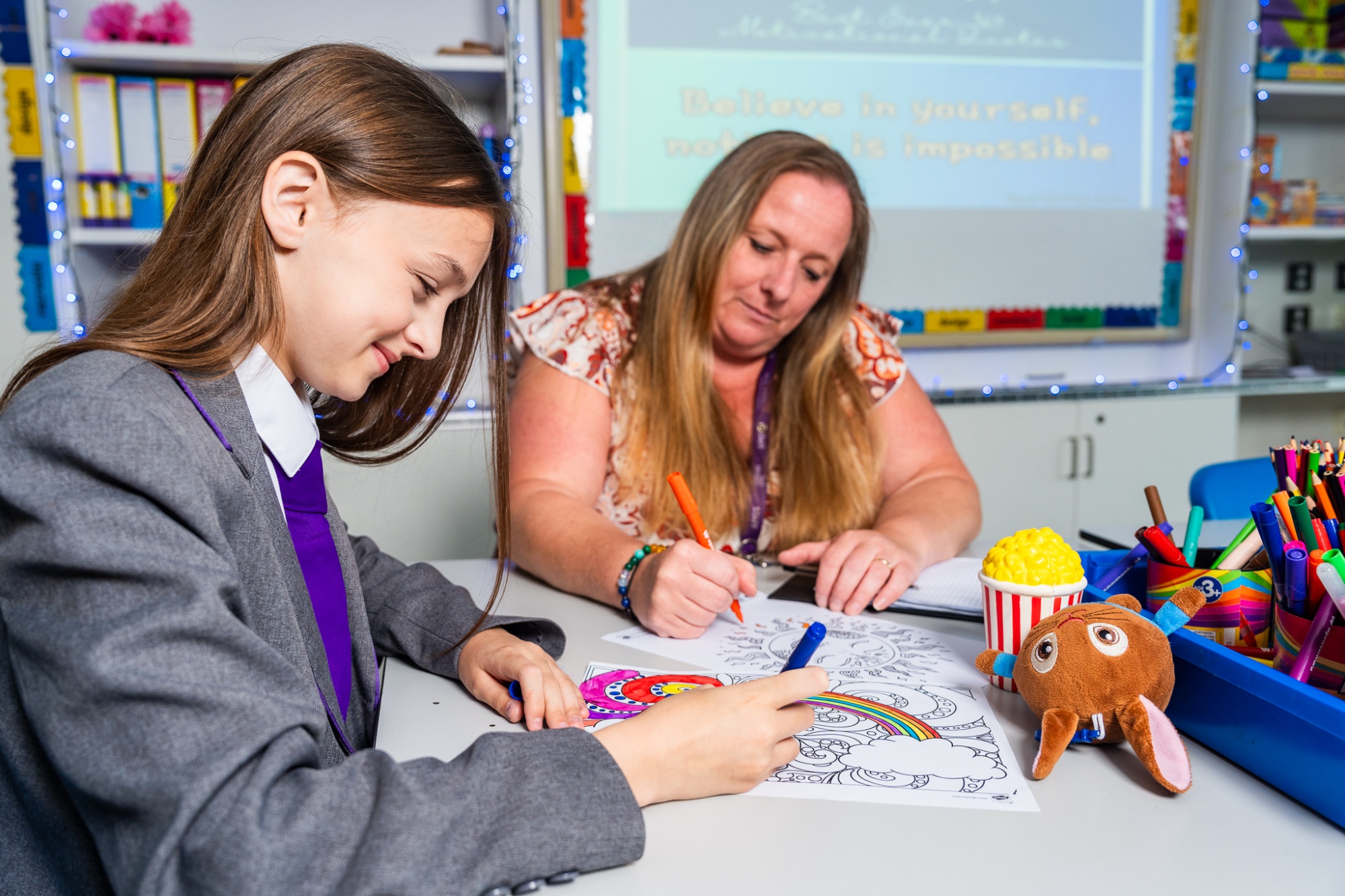
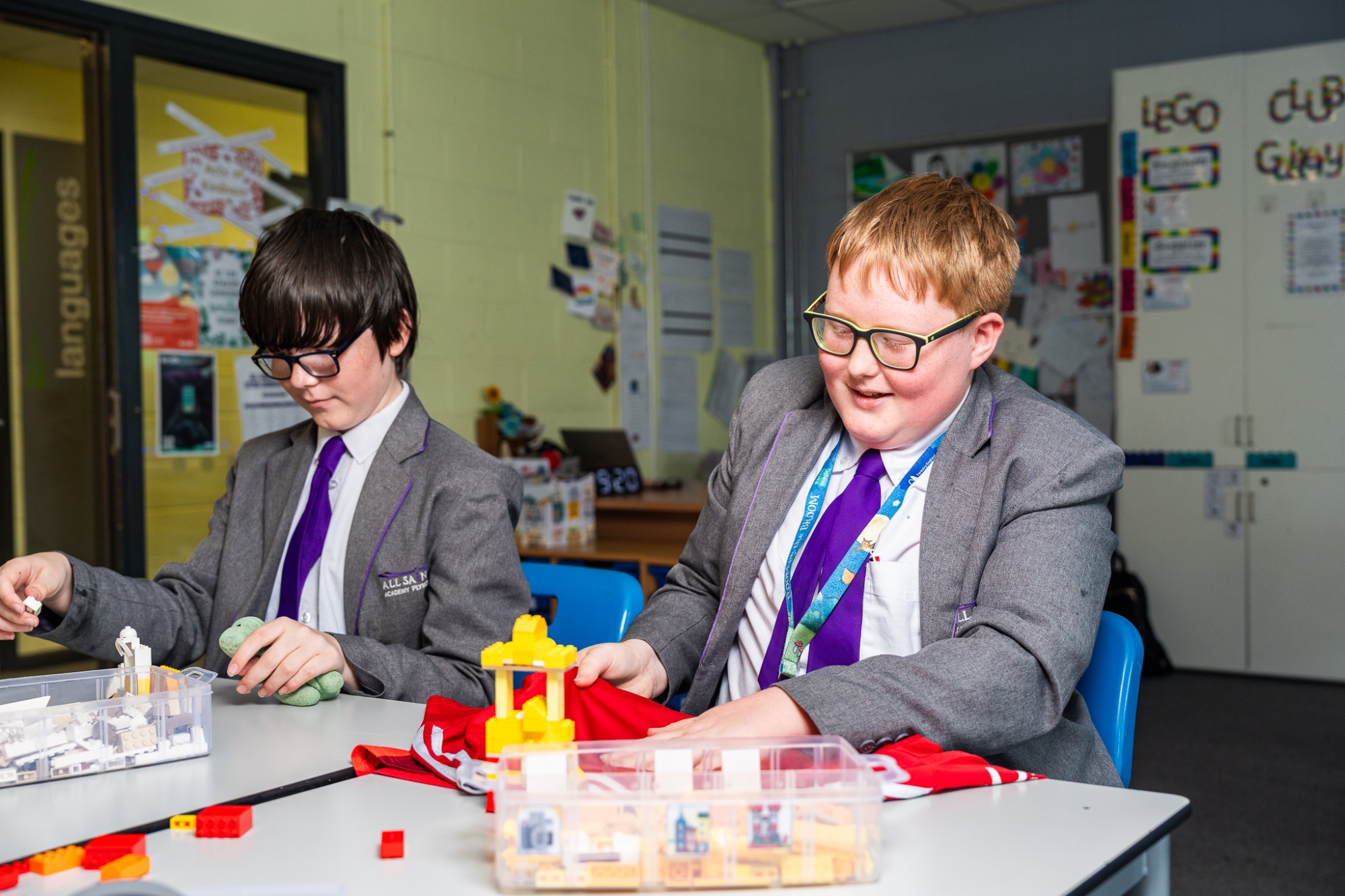
Our Approach: Support Starts in the Classroom
We believe that successful SEND support is built into our teaching, pastoral support and everyday habits.
Every pupil at All Saints has access to our Ordinarily Available Provision. This includes high-quality adaptive teaching, our All Saints Habits, pastoral support, adapted resources and reasonable adjustments where appropriate.
Many pupils' needs can be successfully supported through this provision without requiring specialist intervention or placement on the SEND Register.
Where a pupil requires support that is additional to or different from our ordinarily available provision, we use a graduated approach to understand their needs and determine the right support.
Assess → Plan → Do → Review
Support is reviewed to establish what is working, what may need to change and what the pupil needs next.
Identifying SEND
There are many reasons why a pupil may experience difficulty at school, and not every difficulty means that a child has SEND. We want to validate a child or young person’s personal struggles by recognising when they have reasonable reactions to difficult circumstances, rather than making them feel their reaction is unusual or different. We seek to understand the whole child.
This includes considering whether attendance, relationships, emotional wellbeing, previous experiences or other contextual factors may be affecting a pupil's ability to engage with school or make progress.
Understanding the reason behind a difficulty helps us ensure pupils receive the right support, at the right time, for the right reason.
Please see the Identifying SEND Document to understand how we identify SEND here at All Saints Academy. Click here
Interventions
Where additional support is needed, pupils may access one of our interventions.
Our current intervention offer includes support for:
- emotional regulation
- anxiety
- resilience and growth mindset
- organisation and concentration • identity, communication and relationships
- speech and language
- literacy and reading
Interventions currently available include Anger Gremlins, Anxiety Gremlins, Growth, Sorted, All About Me, Speech and Language interventions and Lexia, alongside additional therapeutic and regulation support through our Tranquillity provision that will only be used after a student has participated in interventions or in exceptional circumstances.
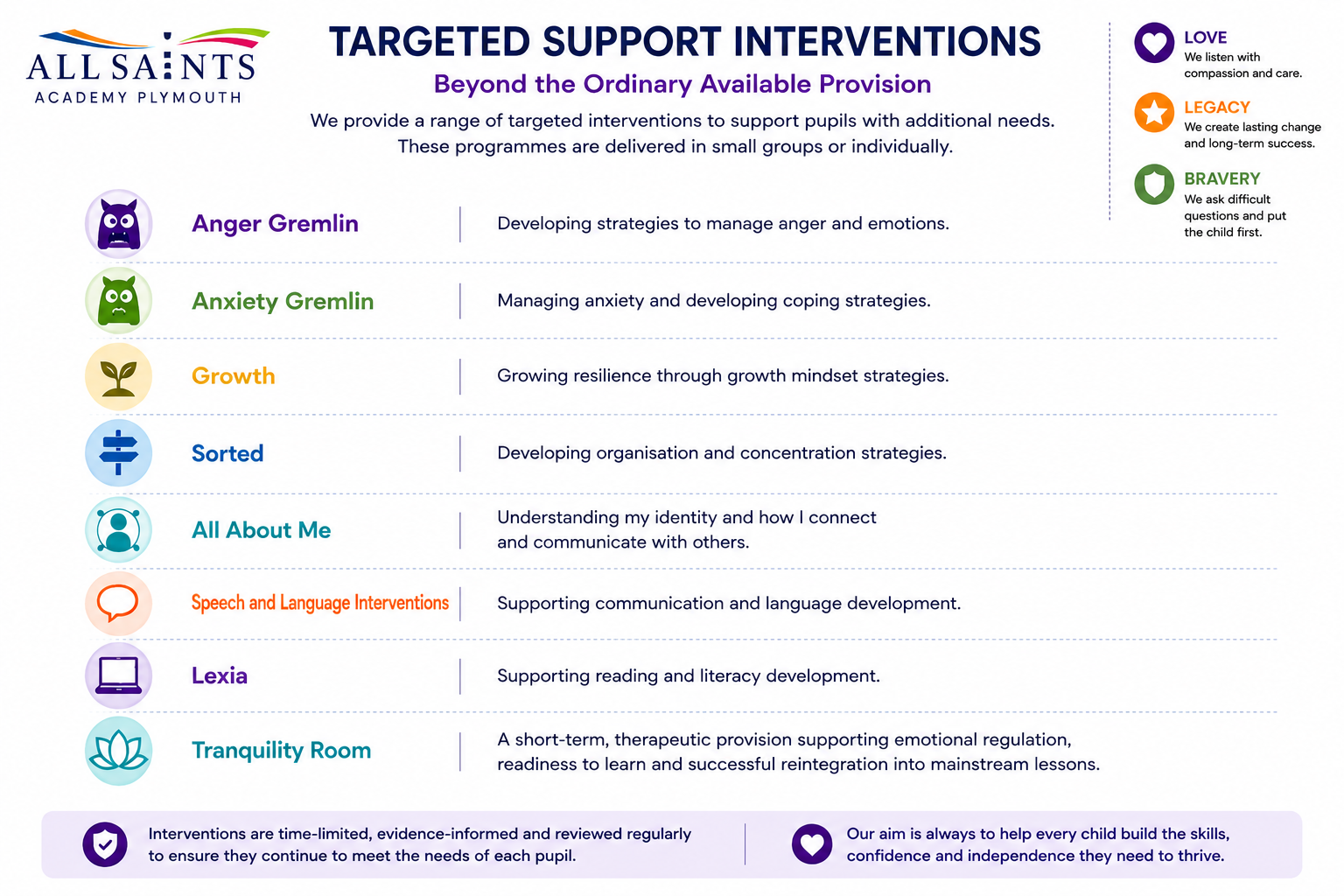
Our aim is not to create dependence on intervention. Support should help pupils develop strategies, confidence and independence that they can increasingly use within their everyday experiences both in school and beyond.
Working with Pupils and Families
We recognise that families are experts on their children.
Parents/carers and young people are central to understanding need, planning support and reviewing whether that support is working.
We aim to ensure families understand what support their child is receiving, why they are receiving it and the difference we expect it to make.
Depending on the needs of the pupil, this partnership may include telephone conversations, meetings, support plans, reviews, pupil voice and, where appropriate, home visits.
We want pupils themselves to understand their strengths, their needs and the strategies that help them to succeed.
Our Guiding Principles
Our core aim is for every pupil to leave All Saints with both the skills and character they need to be independent, find their people, and become part of a community where they are loved and understood.
This experience should begin at school, where we want our pupils to experience being loved and understood, where they develop the bravery to recognise and advocate for what they need, and where they are equipped to create their own legacy.
SENDCo: Ms Aimee Lane
Email: [email protected]
For further information, please see our SEND Information Report and SEND Policy